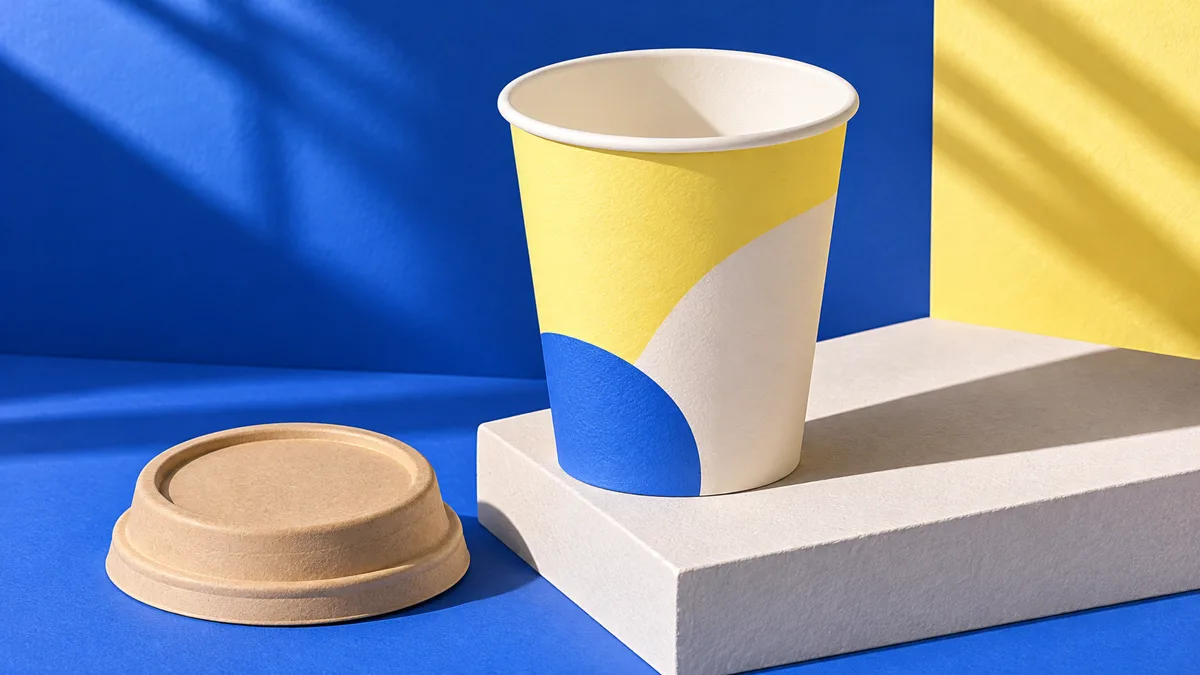
Keep the material description complete
Eco-Products identifies EP-BHC12-WA as paper with a PLA lining. PLA is described as a plant-based plastic. Calling the product “paper” alone can hide the lining, and calling it “plastic-free” would contradict that stated component. A renewable feedstock description is not the same as no plastic, recycled content or acceptance in ordinary paper recycling.
Separate the environmental fields
The current maker page says renewable content yes and recycled content no. Those fields describe different attributes. Renewable material is not automatically recycled material, and a product with no declared recycled content should not acquire a recycled-paper claim because its brand uses environmental language. The current page also has certification text and structured fields whose scope needs careful reading.
Read certification at product scope
The maker describes BPI certification, ASTM D 6868 and CMA approvals for this cup. The BPI product listing includes the exact code. That supports a specific commercial-compostability reference, not a universal statement that every product by the brand or every lid in the basket has identical certification. Check each component and its current record rather than transferring a cup claim to a different accessory.
Keep collection separate
US EPA explains that commercially compostable plastics generally need appropriate commercial or industrial conditions. A certified product may still be rejected by a local facility. A paper cup with a PLA lining does not become suitable for home composting or curbside recycling merely from the word compostable. Ask the actual collector or facility about the exact cup and separate lid.
Do not calculate breakdown time
This site does not infer a backyard decomposition period, landfill result or marine biodegradation rate from a certificate. It has not conducted a composting test. A standard’s existence is not a promise about an uncontrolled disposal setting. If a service location lacks an accepting collection route, record that limitation before choosing the product for a particular waste-management plan.
A practical buying record
Keep the exact cup code, material description, current certification reference and local acceptance response together. Record the lid independently because it may have another material or certification scope. If the local route is unknown, the purchase reference leaves it unknown. A dated price comparison can still be accurate while the intended recovery outcome remains unverified.
Avoid a plastic-free shortcut
A paper exterior can contain a functional plastic lining. PLA’s feedstock description does not erase that material category. Similarly, a conventional poly-coated cup should not acquire a PLA label because it shares a color or nominal capacity with a compostable offer. Keep the material terms that the actual exact sources establish. If a procurement specification prohibits a particular component, ask for the current full declaration;do not infer compliance from a generic environmental product name or a photograph of the outside wall.
Sources & scope
Checked November 4, 2026. Manufacturer and retailer references support the specific statements. Dated displayed prices are not final checkout quotes, performance rankings or performance testing. This shopping reference does not replace the exact product label or qualified individual advice. Exact technical-use conditions and independent content/commerce review remain pending.
Eco-Products: EP-BHC12-WA current maker specification ↗
Keep reading
Commercial compostability does not book a local collection route ↗